-
RTMI is a non-profit, women-led resource organization established in 1994 transforming development landscapes across Bangladesh. With a firm commitment to excellence, we specialize in comprehensive top-notch Research, vigilant MEL processes, systemic training and capacity building programs, and tailored programmatic solutions.Our work focuses on health, population, and nutrition (HPN), education, gender, private sector, climate change, humanitarian response, policy advocacy, livelihood, and human resource
-
development, towards supporting the global efforts to eradicate poverty and to build a society of equal opportunities.At RTMI, we translate ideas into impact through partnerships and sustainable solutions, building pathways to resilience and empowerment.
| 45+ |
| Projects |
| 50+ | 140+ |
| Clientele | Surveys |
| 1200+ |
| Field Staffs |
Notice Board
Who We Are
Empowering Rural Healthcare: The Origins, Growth, and Present Status of Bangladesh’s Community Param
Bangladesh has long faced a critical shortage of formally trained health human resources, historically operating with a sharp deficit in its physician-to-population ratio. While urban centers house the vast majority of qualified doctors, nearly 70% of the population resides in rural areas where access to formal primary healthcare remains heavily restricted. Compounding this issue, most private clinics and hospitals in urban and semi-urban areas are heavily dependent on unqualified clinical support staff who lack formal training or certification.
To bridge this healthcare divide, a unique and highly structured healthcare cadre emerged: the Community Paramedic (CP). Distinct from traditional community health workers, traditional birth attendants (TBAs), or informal "village doctors," Bangladesh’s Community Paramedics are formally educated, certified professionals trained to provide essential maternal, neonatal, child health, and primary curative services directly to underserved rural communities.
1. History and Genesis: From FWV to the CP Cadre
The blueprint for utilizing mid-level healthcare providers in Bangladesh traces back to pioneering non-governmental organizations (NGOs) in the early post-independence era. In 1972, organizations like Gonoshasthaya Kendra (GK) began training local para-professionals to deliver unsupervised primary care across rural villages, proving that heavily supervised local workers could drastically cut maternal and infant mortality rates (Bhuiyan & Haque, 2024; Ellangovin, 2009).
Over the decades, organizations expanded these methodologies to address acute humanitarian crises and systemic gaps. For instance, Research, Training, and Management International (RTMI) developed and implemented a model of training Community Trained Birth Attendants (CTBAs) in 2008—a one-year, mentoring-based course that included two months of clinical skill training involving Rohingya youth in the Cox’s Bazar refugee camps. RTMI also initiated a one-year Community Health Worker (CHW) course with the approval of the Ministry of Health and Family Welfare (MOHFW) through the State Medical Faculty (SMF), though the SMF discontinued the program after a few years of operation. Concurrently, larger NGOs like BRAC scaled up vast networks of traditional CHWs (Bhuiyan & Haque, 2024).
-
Current Information
-
Projects Information
-
Activities Pictures
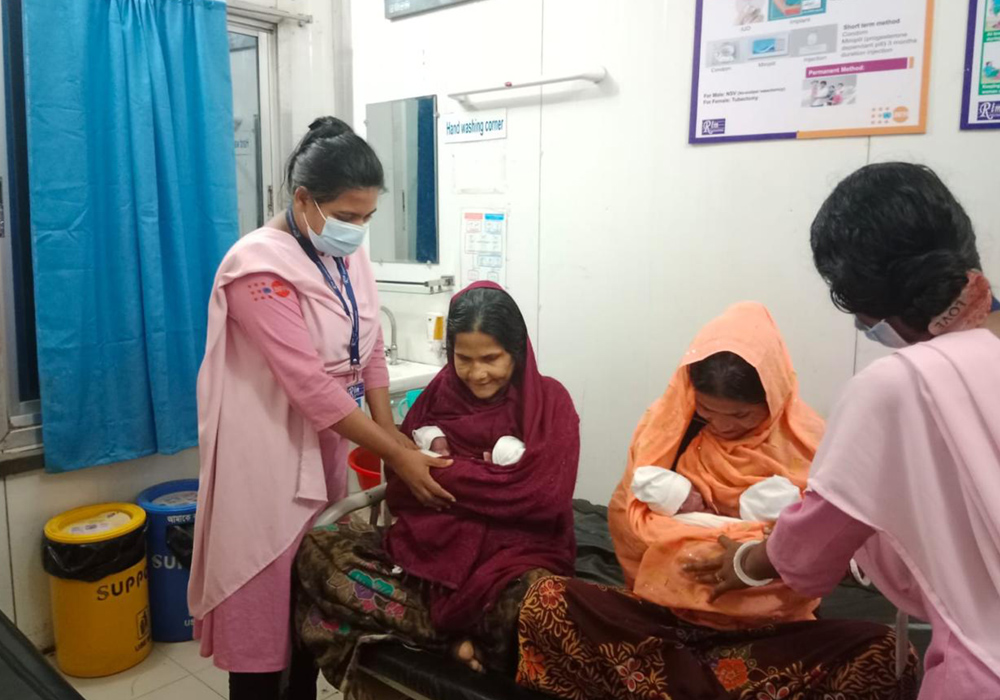
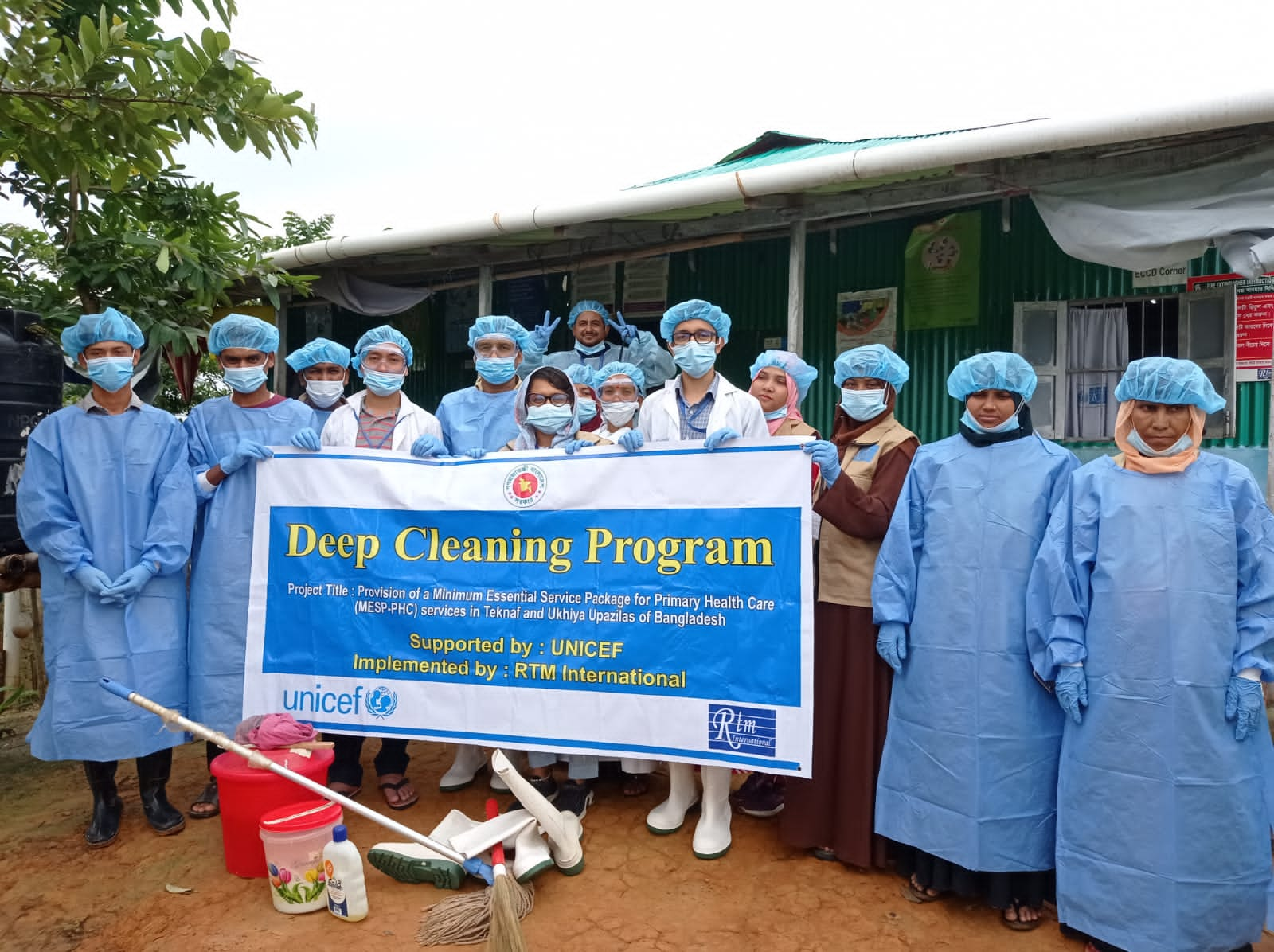
RTM International are implementing Health Support and research activities in the different Districts of Bangladesh which are funded by different Donors.
RTMI-UNFPA Project
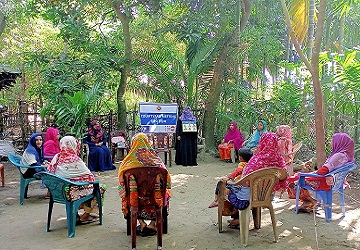
Courtyard meeting organized by RTMI-UNFPA